
If your lawn turns to a sponge every time it rains, you’re not alone — standing water is one of the most common complaints we hear across Southwest Virginia. The good news is that it’s almost always fixable once you understand the cause. Here are the usual culprits and how we solve them.
Heavy Clay Soil
Much of our region sits on dense clay soil that drains very slowly. Water can’t soak in fast enough, so it sits on the surface and turns low areas into puddles. Clay is a big reason drainage work is so common here — you often have to move the water rather than wait for it to soak away.
Poor Grading
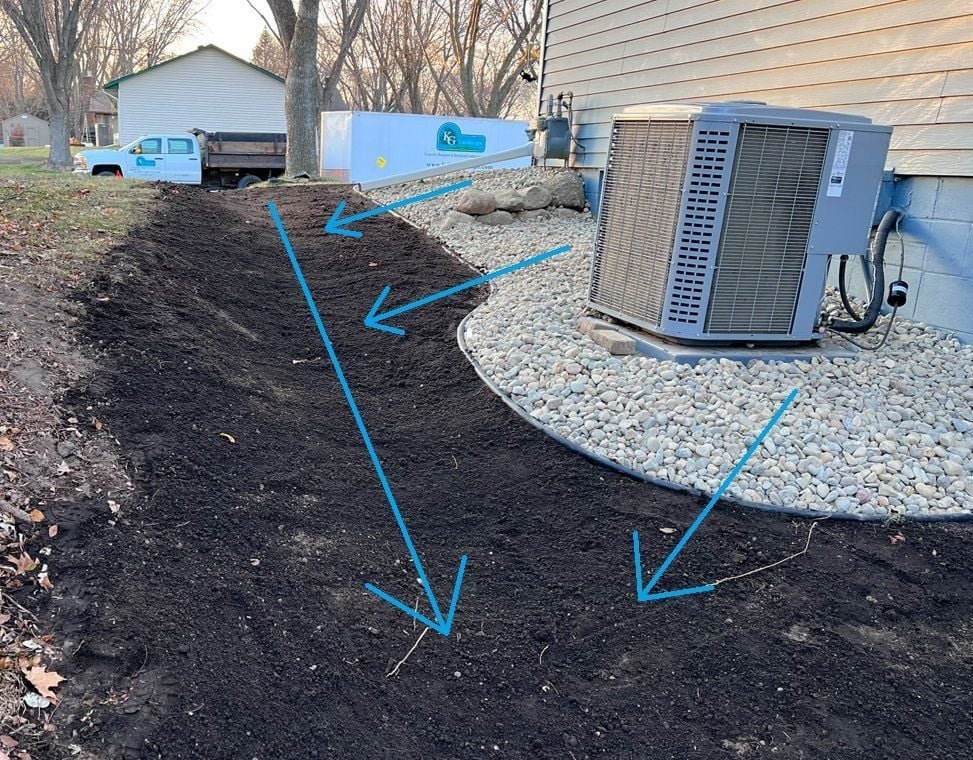
If the ground doesn’t slope away from your home and out of low spots, water has nowhere to go. Improper grading — sometimes left over from original construction — sends water toward the house or lets it pool in dips. Correcting the grade is frequently the first step to a dry yard.
Downspouts with Nowhere to Go
Roofs shed a huge volume of water, and if your downspouts dump it right next to the foundation, you get soggy spots and potential foundation issues. Extending and routing downspouts to carry that water away is a simple but powerful fix.
The Fix Depends on Your Yard
Because every property is different, we start by assessing how water actually moves across your yard. The solution might be regrading, a French drain, a dry creek bed, downspout routing, catch basins — or a combination. Done right, it keeps your yard dry and protects your home for good.