
When water won’t drain, two solutions come up most often: French drains and grading. They’re not the same thing, and the right choice depends on how and where water is collecting on your property. Here’s how to tell them apart — and when you might need both.
What Grading Does
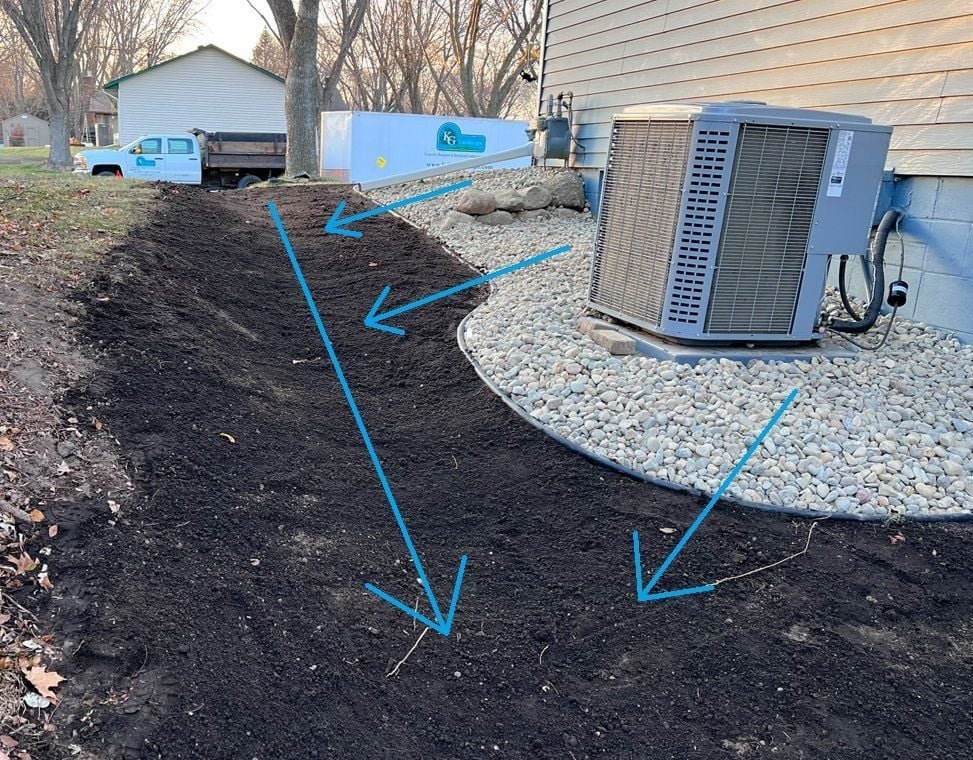
Grading is all about the shape of the land’s surface. By reshaping the ground, we control which direction water flows — ideally away from your home and out of low spots where it likes to pool. If your yard slopes toward the house or has dips that collect water, grading is often the first and most important fix.
Because so much of Southwest Virginia is hilly, correcting the grade solves a surprising number of drainage problems on its own.
What a French Drain Does
A French drain handles water that’s already collecting or moving through the soil. It’s a gravel-filled trench with a perforated pipe that captures water and carries it to a safe outlet away from the problem area. French drains shine where water seeps in, where the ground stays saturated, or where you can’t simply regrade the surface.
The key to a French drain that actually works is proper depth, slope, and outlet — details that separate a lasting solution from one that clogs and fails.
Often, the Answer Is Both
Many properties benefit from a combination. We might regrade a low area to move surface water and install a French drain to handle subsurface water or a persistent wet spot. Because every yard is different, we assess how water actually behaves on your property before recommending a solution.
The goal is always the same: a dry, usable yard and a protected home.